
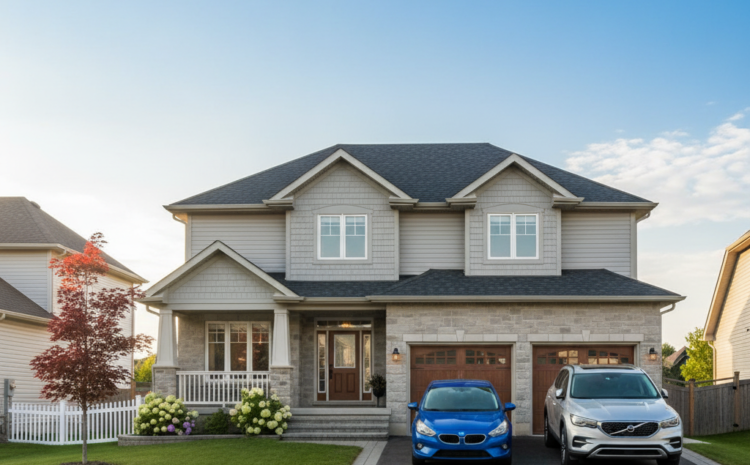
Auto & Home Quotes: Find Better Rates in 2026 Fast
Auto insurance and home insurance quotes are side-by-side estimates for your vehicles and residence that outline coverage options, deductibles, and assumptions. For Whitby and Ontario households, the fastest way to compare is to work with a licensed broker who collects your details once and returns multiple offers from different insurers.
By Chase Insurance Brokers Ltd. • Last updated: 2026-04-22
Above the fold: quick start + table of contents
Get better bundled quotes by preparing driver, vehicle, and property details in advance, then asking a licensed Ontario broker to shop multiple insurers at once. One accurate intake yields faster, comparable options, clearer coverage explanations, and smoother binding—especially when you’re bundling auto and home under one account.
Here’s how this complete guide helps you shop smarter in Ontario while keeping the process fast and stress-free.
- Why auto-and-home quotes matter in Ontario (and what “bundled” really means)
- Exactly how the brokered quote process works—step by step
- What to compare beyond price for both car and home policies
- Coverage types, endorsements, and common add-ons explained in plain English
- Best practices to improve accuracy and eligibility
- Tools, resources, and checklists for Ontario households
- Local examples from Whitby and the GTA, plus an FAQ and next steps
Overview
Bundled auto and home quotes streamline underwriting, may unlock multi-line savings, and put your protection under a single advisor. Normalizing deductibles and limits across quotes helps you compare apples-to-apples, while a broker’s market access finds better fits among carriers serving Ontario households.
Chase Insurance Brokers Ltd. serves individuals, families, and business owners across Ontario with tailored personal and commercial coverage. We partner with top Canadian insurers—Aviva, Intact, Economical, Echelon, Jevco, Premier, and others—so one secure intake can return several high-quality options without repetitive forms.
- Primary lines: Auto Insurance, Home Insurance (including Condo, Tenant, and Rental Property variants), and Business Insurance
- Additional support via affiliate: Life, Travel, and Super Visa/Visitor Insurance
- Service footprint: Whitby-based with Ontario-wide reach and strong GTA expertise
What are auto & home insurance quotes?
Auto and home quotes summarize proposed coverages, deductibles, endorsements, and eligibility conditions for your car(s) and residence. They’re not binding; final terms follow underwriting verification. Using consistent limits and options across quotes makes true comparisons possible before you decide which policy to bind.
Think of a quote as a snapshot of protection, not a final contract. It reflects current facts you’ve provided—driver records and vehicle details for auto; construction, updates, and protections for home. The better your data, the more accurate the results, and the fewer surprises at binding or at claim time.
What’s included in an auto quote
- Core coverages: third-party liability, accident benefits, direct compensation–property damage (DCPD), uninsured automobile
- Physical damage: collision and comprehensive (or specified perils/all perils)
- Common endorsements: OPCF 20 (loss of use), OPCF 27 (liability for non-owned auto), OPCF 43 (waiver of depreciation)
- Risk inputs: driver abstract history, convictions/collisions, annual mileage, vehicle theft exposures, usage (commute, business, pleasure)
What’s included in a home quote
- Core coverages: dwelling, other structures, personal property, additional living expenses, personal liability
- Popular endorsements: sewer backup, overland water, service line, equipment breakdown, scheduled personal articles
- Risk inputs: year built, construction, roof/wiring/plumbing updates, heating type, alarms/monitors, water exposure and prior claims
Turnaround with a broker is often same day once all information is complete. That speed comes from mapping your profile to the right insurers on the first pass.
Why bundled quotes matter in Ontario
Bundling auto and home through one brokerage simplifies renewal, reduces admin time, and may qualify you for multi-line benefits. A single advisor sees your full risk picture, helping you avoid gaps and align options between vehicles, residence, and any add-on properties like condos or rentals.
Ontario households value simplicity when life gets busy—new drivers, hybrid work, renovations, or a move. One account means one renewal date, unified claim coordination, and fewer missed details. From our desk in Whitby, we routinely see bundled planning help during weather events: the same team aids both your vehicle and home claims communication.
- Convenience: one main contact, one renewal cycle, consistent documentation
- Eligibility: some enhancements become available only on multi-line accounts
- Continuity: coordinated support if a storm or collision affects multiple exposures
- Market fit: brokers can place auto and home with the same carrier—or different ones if that’s smarter for your profile
How the quote process works with a broker
With a brokerage, you provide details once. We translate that into insurer-ready applications, search multiple markets, and return a clear, line-by-line comparison. You choose the fit, we bind coverage, and you receive proof of insurance—without juggling separate forms for every carrier.
Here’s our streamlined approach at Chase Insurance Brokers Ltd., refined by thousands of Ontario submissions and focused on speed plus clarity.
- Intake: driver’s license details, VINs, insurance history, tickets/collisions; home year built, updates, alarms, water exposure, and prior claims.
- Coverage design: choose liability limits, deductibles, and key endorsements (e.g., accident forgiveness for auto; sewer backup/overland water for home).
- Market search: we match your profile to insurers whose appetite fits your risk (from Aviva, Intact, Economical, Echelon, Jevco, Premier, and others).
- Comparison review: we normalize quotes for apples-to-apples evaluation and answer wording questions in plain English.
- Bind & confirm: finalize documents, deliver eSlips/evidence of insurance, and schedule your renewal reminder.
Prefer to prepare first? Our internal checklists make intake smoother. For drivers, collecting current policy declarations and license numbers avoids delays. For homes, photos of mechanicals (electrical panel, furnace, hot water tank) speed underwriting reviews.
How to compare auto insurance and home insurance quotes
Normalize quotes first: identical liability limits, deductibles, and endorsements across insurers. Then compare wording, exclusions, and claims service—price alone can hide gaps. Ask scenario-based questions so you know exactly how each policy would respond.
Make quotes apples-to-apples
- Set the same liability limit and deductibles across all options before judging price.
- Choose equivalent endorsements for both auto (e.g., OPCF 20/27/43) and home (e.g., overland water, sewer backup).
- Confirm the basis of settlement (e.g., actual cash value vs. replacement cost) where applicable.
Score each quote on real-world fit
- Coverage breadth and known exclusions you care about (ride-sharing? finished basement? jewelry?)
- Claims reputation and support access through your broker at critical moments
- Flexibility for near-future changes (teen driver, EV purchase, renovation, home-based business)
For deeper dives on specific lines, see our plain-language explainers on reducing auto insurance costs in Ontario and understanding condo versus home insurance differences.
Coverage types and options to compare
Ontario auto policies follow a standard framework, while home policies vary more by insurer. Know the building blocks—core coverages, common endorsements, and settlement terms—so you can pick options that actually match your vehicles, property, and lifestyle.
Auto: the essentials
- Third-party liability and accident benefits as the backbone of Ontario auto protection
- DCPD and uninsured auto for property damage and at-fault gaps
- Collision/comprehensive with thoughtful deductibles tied to your risk tolerance
- Endorsements: OPCF 20 (rental), OPCF 27 (non-owned auto liability), OPCF 43 (waiver of depreciation on new vehicles)
Home: the essentials
- Dwelling, personal property, additional living expenses, personal liability
- Water-related endorsements: sewer backup and overland water for Ontario’s rainfall and thaw patterns
- Infrastructure add-ons: service line and equipment breakdown
- Valuables: schedule jewelry, bikes, or collectibles if limits or exclusions apply
Looking beyond your primary residence? Our guides on tenant insurance in Ontario and rental property protection show how to coordinate coverage across multiple addresses under a single advisory team.
Broker vs direct vs online forms: comparison
Your shopping path affects market access, guidance, and long-term support. Brokers unlock multiple insurers with one intake and provide advocacy at renewal and claim time. Direct writers quote a single brand fast. Generic online forms give quick estimates but limited advice or follow-through.
| Approach | Market Access | Guidance | Speed to First Quote | Ongoing Support |
|---|---|---|---|---|
| Licensed broker | Multiple insurers | Personalized advice | Fast once info is complete | Advocacy at renewal and claims |
| Direct writer | Single brand | Brand-specific | Fast for simple risks | Brand-only service |
| Generic online form | Varies | Minimal | Instant estimates | Limited or none |
In our experience supporting Whitby and GTA households, the broker path wins on total value: broader eligibility, higher chance of finding the “right fit,” and a human to call when life or weather changes fast.
Pricing considerations (without numbers)
Rates reflect risk. Auto rating weighs your record, location, usage, and vehicle attributes. Home rating factors include construction updates, water exposure, and prior claims. The right broker places your profile with carriers whose appetite and underwriting guidelines align with your specifics.
Auto rating signals
- Convictions, collisions, license class and experience
- Annual mileage and commute vs. pleasure use
- Vehicle safety and anti-theft features, including modern ADAS systems
- Local theft and weather patterns across your postal code
Home rating signals
- Age and quality of roof, wiring, plumbing, and heating
- Water proximity, sump/backwater valve, and snowmelt patterns
- Monitored alarm systems and loss history
- Renovations and building materials that improve resilience
For new homeowners, it’s also smart to plan for non-insurance costs at closing. See these Ontario-focused references on legal and closing items: Complete 2026 guide to closing costs, what you’ll pay upfront, and common hidden fees to expect. Aligning budgets early keeps your insurance selections stable.
Best practices to get accurate, competitive results
Accuracy drives better quotes. Gather documents, keep details consistent across applications, and clarify vague wording. Ask for scenario walk-throughs so you understand how endorsements work. A 10-minute review call today often prevents headaches at renewal or claim time.
- Prepare documents: driver’s licenses, current declarations, VINs, prior claim details, photos of home systems and roof if available.
- Normalize choices: identical deductibles, limits, and endorsements before comparing totals.
- Explore discounts: multi-line, winter tires, telematics/UBI for vehicles; monitored alarm/water sensors for homes.
- Plan life changes: teen drivers, EV adoption, renos, or hybrid schedules—share them for more accurate placement.
- Clarify exclusions: water damage scope, vacancy rules, ride-sharing or home-sharing usage where relevant.
Want a deeper step-by-step on cutting premiums responsibly? Our practical explainer on reducing Ontario auto premiums highlights proven levers without sacrificing coverage integrity.
Tools and resources for Ontario households
Use trusted references and a broker’s checklists to demystify policy language. Pair public guides with personalized advice so your final selection balances coverage, eligibility, and long-term service—without surprises.
- Plain-language explainers: condo vs. home nuances, plus tenant and landlord coordination—start with our Condo Insurance Coverage Guide.
- Life and travel coordination: see our Life Insurance Planning Guide (Ontario) for multi-policy planning at renewal.
- Home purchase timelines: Ontario legal resources on closing-day items (2026 closing guide) help you plan documentation and occupancy dates alongside insurance.
Mid-article tip: If you’re moving, request home and auto quotes 2–3 weeks before closing and line up occupancy and mailing addresses. Early coordination reduces underwriting friction and speeds eSlip delivery for your lender and dealership.
Soft CTA: Prefer one secure intake and multiple options? We’ll shop Aviva, Intact, Economical, Echelon, Jevco, Premier, and more—then walk you through the fine print so you pick with confidence.
Case studies and real-world examples (Whitby & GTA)
Local scenarios show how bundling and broker placement reduce friction. With one intake, we can align auto and home coverages, surface better-fit endorsements, and smooth claims communication—especially during weather events or mid-term life changes.
Scenario 1: New homeowner + commuter
- A Whitby couple combined quotes across markets. The selected carrier paired strong overland water protection for their home with favorable rating for their ADAS-equipped sedan.
- Outcome: one renewal date, a single claims line, and rental car coverage that matched their real commute.
Scenario 2: Growing family with a new driver
- Mid-term, a teen was licensed. We re-ran auto options while keeping the home in place, preserving endorsements and avoiding re-underwriting delays.
- Outcome: driver coaching add-ons and a stable renewal path under a bundled account.
Scenario 3: Landlord + personal auto
- Home policy integrated rental property coverage while auto included non-owned liability for occasional rentals.
- Outcome: one advisory team, coordinated windstorm claim handling, and consistent documentation for the lender and tenant.

Local considerations for Whitby
- Lake-effect weather can increase water-related exposures. Ask about overland water and sewer backup endorsements and consider sump/backwater valves.
- Spring and fall are busy for moves and renovations—start quotes 2–3 weeks ahead of closing or demo to maintain eligibility and smooth binding.
- Commuting to nearby cities changes usage categories. Share hybrid schedules and mileage to align rating with reality.
Frequently Asked Questions
These quick answers address the most common questions we hear from Ontario households about bundled auto and home insurance quotes, timing, and what to prepare. For detailed advice, speak with a licensed broker who can review your specific situation.
How long do bundled quotes take?
Once your information is complete, a broker can usually return multiple options the same business day. More complex properties, specialty endorsements, or underwriting clarifications can extend timing, but you’ll typically see a strong first comparison within one working day.
Do I have to bundle auto and home?
No. We compare both bundled and stand-alone placements. Bundling often simplifies service and may provide added benefits, but the best fit can sometimes be different carriers for auto and home. Your broker will show both paths before you decide.
What should I prepare before requesting quotes?
For autos: driver’s licenses, VINs, current policy declarations, and conviction/collision history. For homes: year built, construction details, updates to roof/wiring/plumbing, heating type, alarms, water protection, and any prior claims. Photos of mechanicals help underwriting.
Can a broker help at claim time?
Yes. Your brokerage coordinates with the insurer, explains next steps in plain English, and helps organize documents and details. That advocacy streamlines communication and often reduces the back-and-forth that slows down claim resolution.
What if I’m also insuring a condo or rental?
Tell your broker early so they can coordinate home, condo, tenant, or landlord policies under one review. That approach prevents gaps between building policies and your personal property or liability coverage and often streamlines claims.
Key takeaways and next steps
Bundle when it benefits you, but always compare both paths. Normalize quotes for true comparisons. Look beyond price to wording, endorsements, and claims support. A licensed Ontario broker saves time by shopping multiple insurers and guiding you to a confident, stress-free decision.
- Normalize deductibles, limits, and endorsements across all quotes.
- Review coverage wording and ask scenario questions before you bind.
- Leverage one secure intake to access multiple insurers quickly.
- Plan ahead of moves or renovations to keep eligibility wide.
- Prefer tailored help? Start with our quick intake and a short review call.
Ready to compare bundled options with a Whitby-based team serving all of Ontario? Book a quick discovery call—we’ll shop the market and walk you through choices so you can bind with confidence.
For more line-specific education, explore our pages on finding the best auto insurance broker in Ontario and choosing a trusted Whitby insurance broker.