
After a Whitby Car Accident: Safety, Reporting and Claims
After a car accident in Whitby, check for injuries and call 911 when emergency help is needed, impairment is suspected, or the scene is unsafe. Exchange information safely, follow Ontario reporting guidance, and contact your broker, agent, or insurer as soon as possible. FSRA says an accident should generally be reported within seven days, or as soon as possible afterward.
The first minutes after a car accident in Whitby
Your first priority is safety, not deciding fault or estimating repairs. Turn on your hazard lights if safe, check whether anyone needs urgent help, and stay at the scene unless remaining there creates immediate danger.
- Check for injuries. Call 911 for serious or potentially serious injuries, a dangerous roadway, suspected impairment, fire, or another emergency. Do not move an injured person unless necessary to escape immediate danger. Read the Ontario accident safety guidance.
- Move only when safe. If vehicles are drivable and moving them reduces the risk of another collision, follow emergency-service or police instructions and move to a safe location. Do not stand in an active traffic lane to inspect damage.
- Exchange information calmly. Speak factually. Do not admit fault, accuse the other driver, sign a settlement, or promise to pay for repairs roadside.
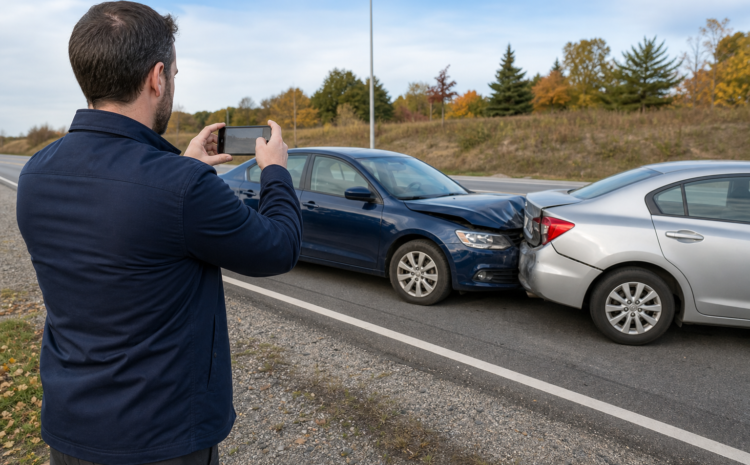
- Record what you can safely record. Note the time, location, weather, road conditions, vehicle positions, damage, witnesses, and what each driver said.
If the other driver leaves, appears impaired, becomes threatening, or refuses to cooperate, do not follow or confront them. Move to safety and give police the vehicle description, licence plate, direction of travel, and other details you recorded.
Use this decision table to choose your next call
The right next contact depends on the danger at the scene, the apparent damage, and what information is still uncertain. Police or emergency services, a Collision Reporting Centre, and your insurer serve different purposes, so one call does not always replace the others.
| Situation | Immediate direction | What to record |
|---|---|---|
| Someone is injured, the scene is unsafe, or impairment is suspected | Call 911 and follow emergency instructions. Do not negotiate the collision at roadside. | Injuries, vehicles, witnesses, visible hazards, and any report information. |
| Apparent combined damage exceeds $5,000 | Follow Ontario police reporting requirements and contact the appropriate police or Collision Reporting Centre. | Damage to every vehicle, driver details, photographs, witnesses, and the report number. |
| No injuries and apparent total damage is under $2,000 | FSRA guidance says to contact a Collision Reporting Centre within 24 hours. Confirm current local instructions before travelling. | Photographs, driver and insurance details, witnesses, collision time, and location. |
| Damage is uncertain or may be hidden | Do not rely on a quick estimate. Ask the appropriate reporting contact for direction and contact your broker or insurer as soon as possible. | Damage to every vehicle, warning lights, fluid leaks, steering or braking symptoms, and photographs. |
| The other driver appears uninsured | Do not argue or accept cash at the roadside. Record the plate and driver details if safe, contact police as appropriate, and tell your insurer. | Insurance information shown, licence plate, vehicle description, witnesses, photographs, and statements. |
| Your vehicle is taken to a tow or storage facility | Tell the insurer where the vehicle is located and ask what inspection, storage, towing, or repair steps apply before authorizing major work. | Tow company, facility address, dates, receipts, vehicle condition, and any authorization you sign. |
| The other driver disputes what happened or the damage | Do not try to settle fault at the scene. Preserve photographs, dashcam footage, witness details, and a factual timeline, then report the disagreement. | Vehicle positions, road markings, signals, weather, statements, and all available records. |
| The other driver leaves the scene | Do not pursue them. Move to safety, contact police or emergency services as appropriate, and notify your insurer. | Plate, make, model, colour, direction of travel, damage, witnesses, and time and location. |
When a Whitby collision must be reported in Ontario
Ontario reporting involves more than one decision. A collision may require police or Collision Reporting Centre attention, notification to your broker or insurer, or both. Reporting an event to your insurer is not the same as deciding whether to make a repair claim.
FSRA identifies injuries, suspected impairment, and apparent total damage to all vehicles over $5,000 as circumstances requiring police attention. For a minor, no-injury collision with apparent combined damage under $2,000, its guidance says to contact a Collision Reporting Centre within 24 hours.
Do not treat the $5,000 figure as permission to leave every collision unreported. Hidden structural damage, later symptoms, an uninsured driver, a disagreement about what happened, or another concern can change the correct response. If you cannot estimate the combined damage confidently, report the uncertainty instead of guessing.
Ontario’s collision-report guidance explains that reports commonly contain driver, vehicle, road-condition, and collision-description information and are usually needed for insurance or legal reasons. See what an Ontario collision report contains.
The first 24 hours after the collision
Once everyone is safe, focus on reporting, evidence, and preventing avoidable complications. Write down the sequence while it is fresh, even if the collision initially appears minor.
- Contact the appropriate police or Collision Reporting Centre when the reporting guidance applies or the circumstances are uncertain.
- Contact your broker, agent, or insurer and provide a factual account. FSRA says the accident should generally be reported within seven days, or as quickly as possible afterward.
- Tell the insurer if anyone has pain, symptoms, or has sought medical attention, including symptoms that were not present at the scene.
- Record where each vehicle is located, especially if one has been towed or placed in storage.
- Keep the claim number, report number, contact names, call times, and promised next steps in one note.
- Do not authorize major repairs, dispose of damaged parts, or sign a release before understanding the applicable inspection and claim process.
- Save photographs, dashcam files, messages, receipts, estimates, medical documents, and witness details in more than one location.
A minor collision can become more complicated if a later estimate reveals hidden damage or a symptom develops after the scene has been cleared. An early, accurate record gives the reporting and insurance contacts a clearer starting point.
What to collect and photograph safely
Collect information only after reaching a safe position. If traffic, weather, or injuries make photography unsafe, leave documentation to police or return to it from a safe location.
- Each driver’s full name, address, phone number, and licence number.
- Each vehicle’s licence plate, make, model, colour, and visible damage.
- Insurance company and policy information.
- Passenger and independent witness names and contact details.
- Date, time, exact location, direction of travel, weather, lighting, and road conditions.
- Photographs of vehicles, damage, debris, fluid leaks, skid marks, signs, signals, lane markings, and nearby construction.
- Dashcam footage, messages, tow receipts, estimates, and police or Collision Reporting Centre documents.
Take wide photographs showing the road layout before close photographs of the damage, provided you can do so without entering traffic. Photograph each vehicle from several angles, the licence plates, nearby signs and signals, and any debris or road condition that may help explain the collision. Related reading: Motor Vehicle Accident Physiotherapy in Airdrie: What to Do After a Collision.
The Ontario Driver’s Handbook advises collecting names, addresses, phone numbers, licence plates, driver’s licence numbers, and insurance information from those involved, including passengers in other vehicles. Review the driver information checklist.
If someone is injured or symptoms appear later
Call 911 for an emergency, and seek appropriate medical attention if pain, dizziness, confusion, weakness, numbness, or other symptoms appear after the collision. Record when symptoms began and what changed.
Tell the broker or insurer about injuries or symptoms when reporting the collision, even if the vehicle damage appears minor. Keep healthcare-provider names, appointment dates, receipts, prescriptions, work records, and a simple symptom timeline. These records help describe what happened, but do not by themselves determine coverage, fault, or entitlement to benefits.
There is no single hardest injury to prove in every Ontario collision. The answer varies with the injury, medical evidence, timing, prior health information, collision facts, and applicable insurance process. A delayed symptom is not automatically unrelated to the collision, but it should be documented and discussed through the appropriate medical and insurance channels.
If the vehicle is unsafe or cannot be driven
Do not drive a vehicle with serious visible damage, leaking fluids, compromised steering or brakes, deployed airbags, damaged wheels, or another unsafe condition. Arrange towing or another safe way to leave through the appropriate emergency, police, roadside, or insurer channel, and retain towing and storage documents.
If the vehicle is taken to a tow yard or storage facility, write down the facility name, address, date of arrival, and any daily storage information shown on the paperwork. Tell the insurer where the vehicle is before moving it again, and ask what inspection or estimate process applies.
Before authorizing major repairs, ask the insurer or claims representative what inspection, estimate, storage, or repair steps apply. Emergency steps to prevent further damage are different from authorizing a complete repair.
Ask whether your policy includes rental car coverage or loss-of-use coverage while a vehicle is being repaired after a covered claim. Eligibility, limits, deductibles, waiting periods, and approved uses depend on the policy and circumstances. Review rental car and loss-of-use coverage.
Contact your broker, agent, or insurer
Give the reporting or insurance contact the policy, vehicle, collision, injury, passenger, and damage information requested. FSRA says an accident should generally be reported within seven days, or as quickly as possible afterward.
- Policy number and registered owner.
- Vehicle details and current location.
- Date, time, and precise Whitby location.
- A factual description without guessing about fault.
- Other drivers’ contact, licence, and insurance details.
- Passenger and witness information.
- Injuries, symptoms, medical attention, or missed work.
- Photographs, dashcam footage, report details, and report number.
- Towing, storage, rental, or repair information and receipts.
Contacting a broker or insurer is not necessarily the same as opening a claim. Ask whether the next step is an insurer claim report, a broker record, a coverage question, or instructions for an inspection. Write down the claim number, contact name, date, and next action.
If you are using a broker, ask which information should go to the broker and which should go directly to the insurer or claims department. Keep your description consistent and correct any mistake as soon as you notice it.
What happens after the report or claim?
The insurer or claims representative will gather information, review the policy, assess damage and circumstances, and explain the next steps for your file. Keep photographs, statements, receipts, reports, estimates, and correspondence together.
Fault, Accident Benefits, and vehicle damage are different questions
Fault determination addresses responsibility under Ontario insurance rules. Accident Benefits are a separate part of auto insurance that may respond to eligible injuries, subject to statutory conditions and the policy. Vehicle damage depends on purchased coverage, the cause of loss, exclusions, limits, and the applicable deductible.
A police report or claim notification does not guarantee payment, and a deductible is not the same as the total repair cost. Legal advice is also different from insurance handling. For serious injury, a dispute, demand, ticket, or legal issue, ask a qualified legal professional.
Following days: keep the file organized
In the days after the collision, respond to requests from the insurer, police, or medical providers and keep a dated record of each development. Add new photographs if damage becomes visible, note changes in symptoms, and save every estimate or receipt connected with towing, storage, transportation, treatment, or repairs.
If the other driver disputes the damage, preserve the original photographs and do not edit dashcam files. If the vehicle remains at a storage facility, ask how storage charges are being handled and record who gave each instruction. If the other driver was uninsured or left the scene, give the insurer and police every identifying detail you have, even if it seems incomplete.
Do not assume that a first estimate is final or that no visible damage means no claim issue exists. Ask focused questions about coverage, deductibles, rental transportation, inspections, repair authorization, and the documents still needed.
Review coverage after the immediate problem is resolved
Review whether your coverage still fits your vehicle, driving use, limits, deductibles, rental protection, and priorities. Compare equivalent options and deductibles, not only the premium, because changing a policy can change exclusions, endorsements, limits, and claim conditions. Compare coverage and deductibles before a renewal or replacement decision.
Questions Whitby drivers still ask after a collision
Can I report a car accident after 24 hours?
Yes. Contact the appropriate reporting or insurance channel as soon as possible and explain the delay accurately. The 24-hour direction applies to FSRA guidance for a minor, no-injury collision with apparent combined damage under $2,000. Insurance notification should generally occur within seven days or as quickly as possible afterward.
Do I have to report a minor collision?
Not every minor collision follows the same path. Consider injuries, impairment, disagreement, hidden damage, uninsured drivers, and the apparent combined damage. When uncertain, ask the appropriate police or Collision Reporting Centre contact and tell your insurer what happened.
What if the other driver refuses information?
Move to safety, avoid confrontation, record the vehicle and licence plate if safe, identify witnesses, and contact police or emergency services as appropriate. Tell your broker or insurer what information is missing.
What if the other driver leaves the scene?
Do not pursue the vehicle. Record the plate, vehicle description, direction of travel, time, location, and witness details if you can do so safely. Contact police or emergency services as appropriate, then report the incident to your insurer.
What if the other driver has no insurance?
Do not accept cash or sign an agreement at the roadside. Record the driver and vehicle details, contact police as appropriate, preserve your evidence, and tell your insurer that the other driver appeared uninsured.
Should I open a claim if damage looks minor?
Tell your broker, agent, or insurer what happened and ask how the event should be recorded. The appropriate contact can explain the policy process, coverage, deductible, and possible next steps. Do not decide solely from a quick visual estimate.
Will reporting a collision automatically increase my premium?
No automatic result should be assumed. The effect depends on circumstances, fault determination, claims history, insurer rules, policy features, and any accident-forgiveness arrangement. Ask how the event will be treated under your policy.
Prepare your next insurance conversation
Gather your policy number, driver and vehicle details, photographs, witness information, report number, medical records, and towing or storage receipts. For help reviewing an Ontario auto policy after a collision, contact Chase Insurance Brokers Ltd. through its auto insurance service.