
How to File an Insurance Claim in Ontario
If you need to file an insurance claim in Ontario, focus first on safety, preventing further damage, documenting the loss, and notifying your broker or insurer promptly. Exact requirements depend on your policy and the type of incident.
This guide covers auto, home, condo, tenant, rental property, and business insurance claims. It does not explain Small Claims Court, employment, consumer, or other civil claims that may also appear in searches for “file a claim.”
Quick summary

- Make people and property safe, calling emergency services when necessary.
- Photograph the damage and preserve relevant records before cleaning or disposing of items.
- Report the loss promptly and ask what forms, inspections, and deadlines apply.
- Save the claim number, adjuster details, estimates, receipts, and written instructions.
- Before authorizing repairs or accepting a settlement, confirm the deductible, scope, limits, and unresolved items.
Step 1: Make people and property safe
Your first responsibility is safety, not paperwork. Move away from hazards, arrange medical assistance if needed, and call 911 or another emergency service when there is an immediate threat such as fire, serious injury, a dangerous electrical condition, or suspected criminal activity.
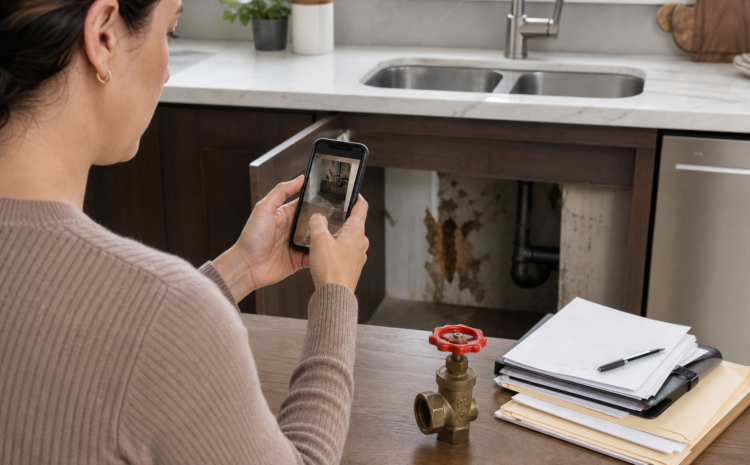
After the immediate danger has passed, take reasonable steps to limit additional damage. You might shut off a water supply, cover a broken window, move undamaged belongings away from a leak, or arrange emergency towing. Do not put yourself at risk, and avoid permanent repairs or discarding damaged property before speaking with the insurer or adjuster unless immediate action is necessary.
Police involvement depends on the circumstances. Theft, vandalism, some collisions, and other incidents may require police information, while a minor household loss may not. Ask what records apply to your situation.
Step 2: Document the loss before cleanup

Evidence helps establish what happened, what was damaged, and what work was required. Take wide photographs showing the location and surrounding conditions, then close-ups of each damaged item or area. Video may help show water movement, mechanical damage, or the condition of a room or vehicle.
Write down the date, approximate time, location, suspected cause, people involved, and actions taken to reduce further damage. Keep police or incident information, witness details, emergency-service records, towing documents, contractor estimates, receipts, and correspondence.
For damaged contents, create an inventory with the description, brand, model, age, serial number where available, purchase information, and estimated replacement cost. Do not assume every item will be covered or every receipt will be required. Preserve what you have and let the adjuster explain what is relevant.
For a detailed sequence from safety measures through settlement, follow this Ontario insurance claim process.
What to collect for different Ontario claims
The first call and useful evidence vary by claim type. This table is a starting point, not a universal list of required documents.
| Claim type | Typical contacts | Useful evidence | Possible next step |
|---|---|---|---|
| Auto | Broker or insurer, police where applicable, towing service | Photos, driver and vehicle details, repair estimate, incident number | Vehicle inspection and repair assessment |
| Home, condo, or tenant | Broker or insurer, emergency services, restoration provider | Photos, contents inventory, receipts, invoices, mitigation records | Adjuster or restoration inspection |
| Rental property | Broker or insurer, tenant or property manager, emergency trades | Photos, lease and property records, repair and rental records | Repair scope and loss-of-income review where relevant |
| Business | Broker or insurer, emergency services, key staff or vendors | Photos, inventory, invoices, contracts, payroll, sales, and expenses | Property, liability, or business-interruption review |
Keep originals when possible and send copies or secure digital files. Organize them by date and label photographs clearly.
Step 3: Report the claim promptly
Contact your broker or insurer as soon as reasonably possible using your policy’s reporting instructions. Provide your policy information, what happened, when and where it happened, who was involved, apparent damage, emergency steps taken, and any police or incident reference number.
Ask whether the broker will open the claim with the insurer, whether you should report directly, and what must happen before cleanup or repairs. Prompt reporting gives the insurer an opportunity to inspect the loss and helps reduce the risk of missing a policy-specific requirement. Do not assume one deadline applies to every claim.
For an auto claim, Ontario’s official damaged-vehicle process says the damage claim report should be submitted within 10 days of the occurrence and identifies a two-year limitation period for bringing a claim to action. Those details apply to that specific process, not automatically to home or business claims. Review the Ontario damaged-vehicle claim instructions for the official information.
Step 4: Record the claim number and milestones
Save the claim number, adjuster’s name and contact details, reporting date, and preferred communication method. Use the claim number on estimates, receipts, emails, and photographs.
Ask focused questions:
- When should the adjuster or inspection provider contact me?
- What emergency work can proceed, and what needs approval?
- Which forms, inventories, estimates, or receipts are required?
- Could temporary accommodation, vehicle rental, storage, or another expense apply?
- What is the next decision point, and who will confirm it in writing?
What to do if the loss happens after hours
Safety and damage control still come first at night, on weekends, and on holidays. Check your policy for the insurer’s emergency reporting number, and keep records of emergency services, temporary repairs, towing, accommodation, or mitigation expenses.
Chase Insurance Brokers lists 24-hour claims support and says its team can help coordinate emergency response services. Its after-hours emergency property claims number is 647-977-9582. See its 24-hour claims assistance information for details.
After-hours support does not replace policy instructions or guarantee coverage. Explain what happened, what is unsafe, what damage is continuing, and what action has already been taken. Ask what evidence to preserve and whether an emergency vendor should attend.
Step 5: Work with the adjuster
An adjuster generally reviews the circumstances, available evidence, policy terms, and estimated damage. The process may include an inspection, requests for photographs or receipts, conversations with contractors, and forms such as a proof of loss where applicable. Not every claim requires the same investigation.
Answer accurately and keep written records of important conversations. After a call, send a short email confirming your understanding of any approval, limitation, requested document, or next step. Ask for plain-language explanations of unfamiliar terms.
Business claimants should preserve accounting and operational records rather than estimating lost income from memory. Landlords should keep property, lease, repair, and rental records. Tenants and homeowners should separate damaged contents from unaffected items where practical while keeping damaged items available for inspection.
Step 6: Review repairs, vendors, deductibles, and settlement
Before authorizing substantial work, confirm the proposed scope, price, timing, warranty, and payment arrangement. Insurer-approved vendors may simplify coordination and billing, but they are not automatically the only option. If you prefer another contractor, ask how that choice affects approval, documentation, and payment.
Review estimates carefully. A low estimate may omit hidden damage, code-related work, disposal, taxes, temporary protection, or necessary matching work. An independent estimate can identify questions, but discuss it with the adjuster before committing to repairs or assuming the extra amount will be covered.
Confirm your deductible before approving repairs. It is generally the portion you pay on a covered claim under the applicable coverage, but its application depends on the policy and loss type. For auto claims, review this Ontario auto insurance deductible guide.
Also ask how the insurer is treating policy limits, exclusions, depreciation, replacement cost, temporary expenses, and taxes. Coverage is determined by policy wording and the facts of the loss, not an estimate alone. Request important decisions in writing.
If the estimate or settlement appears incomplete
Identify the specific issue: a missing damaged item, an incomplete repair line, an unexpected deductible, or a policy limit or exclusion you do not understand.
- Compare the decision with the relevant policy wording and original evidence.
- Mark omitted items, disputed quantities, or necessary work that is not listed.
- Provide relevant photographs, inventories, receipts, estimates, or expert information.
- Ask for a written explanation tied to the policy wording.
- Ask your broker to review the issue and explain available next steps.
A broker can clarify communications and policy questions, but cannot guarantee that an insurer will change its decision. Seek independent legal advice if the matter becomes a legal dispute.
Step 7: Confirm the file is complete
Before considering the claim finished, retain the final estimate, settlement correspondence, invoices, proof of payment, repair records, photographs, inspection reports, and deductible record. Confirm that agreed work is complete and that no temporary service, damaged item, or related expense remains unresolved.
Ask whether the insurer requires a final invoice, release, proof of completion, or other document. Keep the claim number with your policy records and tell your broker about relevant changes to the vehicle, property, business, or risk profile at renewal.
Frequently asked questions
How do I start an insurance claim in Ontario?
Make the situation safe, prevent further damage where safe, document the loss, and contact your broker or insurer promptly. Provide policy details, incident information, photographs, and any applicable police or emergency reference number.
What evidence should I collect?
Collect photographs, video, an incident timeline, receipts, inventories, estimates, invoices, police information where applicable, and correspondence. Requirements vary by claim type.
Do I have to pay my deductible before a claim is handled?
A deductible may apply, but the amount, timing, and applicable coverage depend on your policy. Confirm it with the adjuster before authorizing repairs or accepting a settlement.
What should I do after hours?
Handle immediate safety and damage-control needs, then use the insurer’s emergency reporting instructions. Chase Insurance Brokers lists 24-hour claims support and 647-977-9582 for after-hours emergency property claims.
What if the settlement seems incomplete?
List the missing damage or disputed amount, provide supporting evidence, and ask for a written explanation tied to the policy. You can also ask your broker to review the communication.
Conclusion: Take the next documented step
Filing an insurance claim in Ontario is easier to manage when you follow a clear sequence: protect people, limit further damage, preserve evidence, report promptly, track the claim, cooperate with the adjuster, and review repair or settlement decisions against the policy.
For Ontario insurance support across auto, home, tenant, condo, rental property, and business needs, contact Chase Insurance Brokers Ltd. through its website or claims channels for policy-specific guidance.