

Ontario Auto Insurance Deductible Guide: Choose Wisely in 2026
Ontario auto insurance deductibles are the portion you agree to pay out of pocket when you make a claim, before your insurer covers the rest. This Ontario auto insurance deductible guide explains what deductibles are, how they work for collision, comprehensive, and DCPD, and how to choose the right amount for your driving and budget.
Quick Answer
In Ontario, a deductible is the amount you pay first on certain auto claims (like collision or comprehensive). Choosing higher deductibles usually lowers your premium but increases what you’d pay if a loss occurs. For tailored guidance, Chase Insurance Brokers at 400 Dundas St E G-T4A, Whitby compares options across multiple insurers.
At a Glance
Deductibles shift part of the financial risk from the insurer to you. Ontario drivers typically choose separate deductibles for collision, comprehensive, and sometimes DCPD. Higher deductibles often mean lower premiums, but more out-of-pocket at claim time. The best choice balances your cash flow, vehicle value, and risk tolerance.
- What you’ll learn:
- What an Ontario auto insurance deductible is—and isn’t
- How collision, comprehensive, and DCPD deductibles differ
- When deductibles apply and when they don’t
- How to pick a deductible that fits your finances
- Ways to coordinate deductibles with emergency savings
- Why it matters:
- Deductible choices directly influence your premium
- They determine how much you pay at claim time
- Smart selections reduce financial stress after a loss
- Who this is for:
- Ontario drivers renewing or shopping for auto coverage
- New Canadians learning the Ontario Automobile Policy rules
- Parents adding young drivers and revisiting risk tolerance
- How we help (Chase Insurance Brokers, Whitby):
- We compare deductible options across multiple Canadian insurers
- We explain trade-offs clearly and help align choices with your budget
- We support fast changes during the year (adding/removing vehicles)
What You’ll Find in This Guide
This complete guide covers definitions, why deductibles matter, how they apply in claims, types used in Ontario, best practices, tools, examples, and FAQs. Use it to make a confident choice and to prepare for renewal discussions with your broker.
- What Is an Auto Insurance Deductible in Ontario?
- Why Deductibles Matter for Ontario Drivers
- How Deductibles Work in Ontario Claims
- Types of Deductibles in Ontario (Collision, Comprehensive, DCPD)
- Best Practices for Choosing Your Deductible
- Tools and Resources for Ontario Drivers
- Real-World Examples and Scenarios
- Pricing Dynamics of Deductibles in Ontario
- FAQ
- Conclusion
- Related Articles

What Is an Auto Insurance Deductible in Ontario?
An auto insurance deductible is the amount you agree to pay first on covered losses before your insurer pays the remaining eligible amount. In Ontario, you typically set different deductibles for collision and comprehensive, and some insurers also offer a DCPD deductible option.
- Plain definition:
- A deductible is your share of certain claim costs, paid up front when a covered event occurs.
- It applies per claim, not per policy year.
- What it is not:
- It is not a fee you pay at renewal or a fixed monthly charge.
- It does not apply to all coverages (for example, many liability claims do not involve a deductible).
- Where it shows up on your policy:
- On your Certificate of Automobile Insurance or policy declaration page.
- Usually listed separately for collision and comprehensive; DCPD may appear if offered and selected.
- Ontario context:
- Ontario follows the Ontario Automobile Policy (OAP 1) form. Deductibles are a standard part of optional physical damage coverages.
- Direct Compensation–Property Damage (DCPD) addresses damage when another driver is at fault under specific conditions; some insurers provide an optional DCPD deductible.
In our experience helping Ontario drivers, the most common confusion is whether deductibles are “extra charges.” They are not. They only come into play if you file a claim that triggers the deductible-bearing coverage.
Self-contained answer: In short, an Ontario auto deductible is the portion you pay first on certain claims, separate from your premium. It’s listed per coverage (like collision or comprehensive) and applies each time a covered loss happens. Understanding which coverages carry a deductible prevents surprises at claim time.
Why Deductibles Matter for Ontario Drivers
Deductibles influence both your premium and your out-of-pocket costs after a loss. Selecting the right level can lower what you pay annually while still protecting your savings if the unexpected happens.
- Premium impact:
- Higher deductibles often correlate with lower premiums because you assume more initial risk.
- Lower deductibles generally mean higher premiums but smaller out-of-pocket payments if you claim.
- Cash-flow planning:
- Matching your deductible to your emergency savings helps avoid financial strain.
- Drivers with limited savings usually prefer lower deductibles to limit a single, large payment.
- Vehicle value and age:
- Newer or financed vehicles often justify lower deductibles for better protection.
- Older vehicles with modest market value may suit higher deductibles or fewer physical damage coverages.
- Driving patterns and exposure:
- Long daily commutes, urban parking, or frequent highway use can increase exposure to loss events.
- Seasonal drivers or low-mileage households might tolerate higher deductibles.
- Family dynamics:
- Adding a new driver often prompts a rethink of risk tolerance and deductible levels.
- Shared vehicles can see diverse driving patterns, affecting the ideal deductible.
For many readers, the right deductible isn’t the lowest or the highest—it’s the one that still feels manageable on a busy day when something goes wrong. We’ve found that pairing deductible decisions with an annual check of your savings balance keeps choices aligned with real life.
Self-contained answer: Deductibles matter because they change both what you pay in premiums and what you’d owe during a claim. The best choice fits your savings, vehicle value, and driving exposure, so a bad day stays a setback—not a financial crisis.
How Deductibles Work in Ontario Claims
When a covered loss occurs, your insurer determines the claim amount, subtracts the deductible for that coverage (if applicable), and pays the balance up to policy limits. The deductible applies once per claim, not per policy year.
- Typical claim flow:
- Report the loss to your insurer or broker promptly.
- Provide details, photos, and—if needed—police or incident reports.
- The insurer confirms coverage and estimates damage.
- The applicable deductible is applied; you pay that portion first.
- The insurer pays the remaining eligible amount to you or the repair facility.
- When deductibles usually apply:
- Collision damage to your own vehicle after an at-fault or single-vehicle crash (when collision is purchased).
- Comprehensive losses like theft, fire, vandalism, or weather-related damage (when comprehensive is purchased).
- When deductibles may not apply:
- Many third-party liability claims (injury or property damage you cause to others) have no deductible.
- Under DCPD rules, if another driver is deemed at fault under qualifying conditions, your insurer handles your damage; some insurers offer an optional DCPD deductible that would apply if selected.
- Key documentation tips:
- Take clear photos at the scene and gather contact information from others involved.
- Save receipts for emergency fixes (like towing or temporary repairs) and share them with your adjuster.
- Keep your broker looped in for guidance on next steps and coverage specifics.
Need help navigating a claim? Start with your broker. Our team at Chase Insurance Brokers coordinates with partner insurers and keeps you informed, so you know exactly when and how your deductible applies.
Self-contained answer: In practice, a deductible is taken off the approved repair or settlement amount for the coverage triggered by your loss. You pay that portion, and the insurer pays the rest—up to limits and subject to terms and exclusions.
Types of Deductibles in Ontario (Collision, Comprehensive, DCPD)
Ontario drivers commonly choose deductibles for collision and comprehensive. Some insurers also offer an optional DCPD deductible. Each deductible type applies to different kinds of damage and may affect your premium differently.
- Collision deductible:
- Applies when your vehicle is damaged in a collision you cause or in single-vehicle crashes.
- Helps manage claim frequency for repairable damage.
- Lower collision deductibles reduce what you’d pay after a crash, often at the trade-off of higher premiums.
- Comprehensive deductible:
- Applies to non-collision losses like theft, fire, vandalism, falling objects, and certain weather events.
- Often selected differently from collision since loss patterns differ.
- Drivers may choose a distinct comprehensive deductible that reflects their exposure to these perils.
- DCPD deductible (if available):
- Relates to damage to your vehicle when another driver is at fault under Ontario’s DCPD rules.
- Some insurers allow adding a DCPD deductible, which can influence premiums.
- Check your policy declarations to see whether you have a DCPD deductible and its level.
| Deductible Type | Typical Losses | Applies When | Notes |
|---|---|---|---|
| Collision | At-fault crashes, single-vehicle incidents | Your car is damaged in a crash and collision coverage is purchased | Lowering the deductible reduces your out-of-pocket after at-fault collisions |
| Comprehensive | Theft, fire, vandalism, weather, falling objects | Non-collision damage and comprehensive is purchased | Loss frequency may vary by neighborhood, storage, and commute |
| DCPD (optional) | Damage when another driver is at fault under DCPD rules | DCPD applies and an optional deductible was selected | Availability and levels vary by insurer; check your declarations |
Self-contained answer: Ontario policies use different deductibles by coverage: collision for crash damage you’re responsible for, comprehensive for non-collision perils, and an optional DCPD deductible on some policies. The level you choose changes both premiums and what you’d owe after each kind of loss.
Best Practices for Choosing Your Deductible
Choose a deductible you can pay comfortably on a stressful day. Align it with your emergency savings, vehicle value, and exposure to loss. Revisit the amount each renewal to reflect life changes and driving patterns.
- Check your savings first:
- Pick a deductible that you could pay tomorrow without derailing essentials.
- Consider separate comfortable levels for collision and comprehensive.
- Match deductible to vehicle value:
- Newer or financed vehicles often justify lower deductibles for stronger protection.
- Vehicles nearing the end of their useful life might suit higher deductibles—or even dropping certain physical damage coverages.
- Account for where you drive and park:
- Urban street parking, overnight outdoor storage, or long highway commutes can increase exposure to different perils.
- Garage storage, low-mileage years, or telematics programs may support different deductible strategies.
- Adjust with life events:
- New job commute, adding a young driver, or moving neighborhoods may justify a change.
- Review at every renewal; small, steady adjustments keep the policy aligned.
- Leverage your broker:
- Ask for side-by-side comparisons that show premium and risk trade-offs.
- Discuss carrier-specific options like disappearing deductibles or DCPD choices, if available.
Want a structured walkthrough? Our coverage types explained guide pairs well with this section and helps you align deductibles with broader protection needs.
Self-contained answer: The best practice is simple: pick a deductible you can truly afford on short notice, revisit it yearly, and set separate levels for collision and comprehensive if your risks differ. Use a broker’s comparisons to dial in comfort and cost.
Tools and Resources for Ontario Drivers
Use policy documents, broker comparisons, and insurer tools to test scenarios before you choose a deductible. Reviewing options side by side reveals the right balance between premium and out-of-pocket risk.
- Your declarations page:
- Confirm current deductibles for each coverage.
- Note any special endorsements, like optional DCPD deductibles.
- Broker comparisons (Chase Insurance Brokers, Whitby):
- We compare multiple insurers across Ontario to reveal deductible choices and trade-offs.
- We explain how claim scenarios would play out under each option.
- Carrier portals and apps:
- Many partner insurers offer account dashboards showing your current selections.
- Some provide risk education tools that help visualize how deductibles affect coverage outcomes.
- Annual renewal checklist:
- Update mileage and driver details so comparisons are accurate.
- Note any changes in parking, commute, or storage that could affect risk.
Prefer human guidance over portals? Our auto insurance service page outlines how we tailor options and support changes during the year.
Self-contained answer: Practical tools include your declarations page, broker-led comparisons, and insurer apps. Together they show your current settings and reveal how alternate deductible levels would shift both premiums and potential claim payments.
Real-World Examples and Scenarios
Consider how everyday Ontario scenarios trigger different deductibles. Reviewing examples before renewal helps you choose amounts you can comfortably manage, even on a hectic day.
- Whitby parking-lot bump (collision):
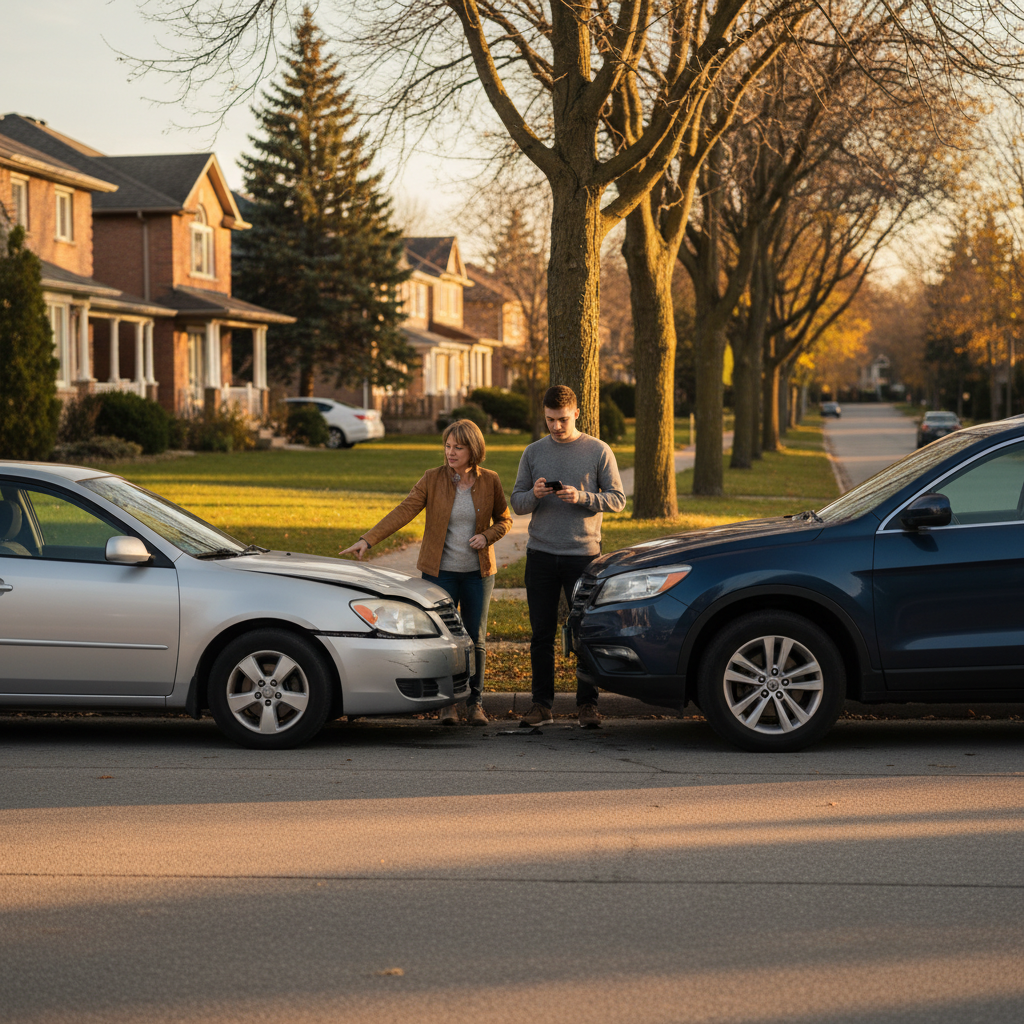
- Low-speed contact in a plaza lot scuffs a bumper.
- Collision coverage would apply; your collision deductible is considered first.
- If repair estimates are close to the deductible, you may decide to self-pay to avoid a claim.
- Overnight storm damage (comprehensive):
- Branches fall during high winds, cracking a windshield.
- Comprehensive coverage responds; the comprehensive deductible would apply.
- Glass endorsements can alter how glass claims are handled; check your policy.
- Theft from driveway (comprehensive):
- Vehicle is taken overnight; police report filed.
- Comprehensive responds, subject to your deductible and policy terms.
- Anti-theft devices and secure parking reduce risk; ask your broker about options.
- Rear-ended on Highway 401 (DCPD context):
- Another motorist is determined at fault under DCPD rules.
- Your insurer addresses your vehicle damage; if you selected an optional DCPD deductible, it could apply.
- Keep dashcam footage and photos—documentation supports efficient handling.
- New driver in the household (revisit levels):
- Teen driver increases exposure; family chooses a lower collision deductible.
- Offset with a higher comprehensive deductible if non-collision risk remains low.
- Review again after a year of driving experience.
- Car nearing end of lease (recalibrate):
- With a return date approaching, evaluate whether current levels still make sense.
- Discuss trade-offs with your broker before renewal paperwork finalizes.
- Seasonal commuter (flex strategy):
- Summer highway miles increase exposure; winter usage drops significantly.
- Consider adjusting deductible levels at renewal to reflect seasonal risk.
- Condo parking vs. street parking (different risks):
- Garage storage may reduce some comprehensive risks; street parking can raise exposure.
- Tailor comprehensive deductible accordingly.
- Telematics program user (data-informed):
- Safe driving metrics can improve rating factors with some carriers.
- With better data on habits, you may adjust deductibles more confidently.
- Business owner with branding wrap (risk to downtime):
- Brand visibility raises concern about vandalism risk.
- Comprehensive deductible strategy becomes more important; align with business needs.
- Shared family vehicle (variable exposure):
- Different drivers, routes, and parking spots.
- Split strategy: lower collision deductible, tailored comprehensive deductible.
- Rural weekend trips (wildlife risk):
- Increased comprehensive exposure from wildlife strikes.
- Reassess comprehensive deductible before road-trip season.
- Ride-share side hustle (ask first):
- Business use may require specific endorsements.
- Confirm coverage and deductible implications with your broker.
Looking for a one-on-one review? Our team helps Ontario drivers weigh scenarios like these during renewal. Explore our overview on how to choose auto insurance in Ontario to prep for a productive conversation.
Self-contained answer: Real-life examples clarify how each deductible type activates. By imagining your own commute, parking, and travel habits, you can set different levels for collision and comprehensive—and decide if an optional DCPD deductible makes sense.
Local Tips
- Tip 1: Highway 401 through Whitby can be dense at rush hour. Keep dashcam footage and photos after any incident—this speeds up claims and helps confirm how deductibles apply.
- Tip 2: Winter brings ice and sudden snow along the lakeshore. Review comprehensive deductibles before the season if you park outside or commute early mornings.
- Tip 3: If you change parking (from condo garage to on-street near downtown Whitby), tell your broker. The risk profile can shift, affecting the best deductible mix.
IMPORTANT: Tailor deductible choices to where you drive, park, and the weather patterns you face in Durham Region.
Need help comparing deductibles?
We’ll map options across multiple Canadian insurers and align them with your goals. Start with our guide to reducing auto insurance costs in Ontario, then request tailored comparisons from our Whitby office.
Pricing Dynamics of Deductibles in Ontario
Deductible levels are a lever that influences your premium. Higher deductibles typically mean lower premiums, while lower deductibles raise premiums but reduce what you pay at claim time. The right setting balances premium savings with manageable out-of-pocket risk.
- Trade-off mechanics:
- Raising a deductible shifts more initial cost to you in exchange for a lower premium.
- Lowering it does the opposite—higher premium, smaller out-of-pocket during a claim.
- Carrier-by-carrier nuance:
- Insurers weigh deductibles differently within their rating systems.
- Comparing across multiple insurers reveals which level suits your profile best.
- Coverage-specific choices:
- You can select different deductibles for collision and comprehensive to match distinct risks.
- Optional DCPD deductibles, where available, add another lever to consider.
- Household strategy:
- Two vehicles might warrant different deductible mixes based on use, parking, and drivers.
- Reassess yearly as vehicles age or driving patterns change.
Chase Insurance Brokers emphasizes a savings-first approach (clients often save up to 30% across key lines) and can show how deductible choices complement those savings without sacrificing needed protection.
Self-contained answer: Deductibles are a pricing lever: raise them to reduce premiums, lower them for smaller claim-time payments. Because each insurer weighs this differently, broker comparisons are the fastest way to see which levels produce the most comfortable balance for you.
Above the Fold: Hook and Table of Contents
Use this section as your quick launchpad. Skim the key topics, jump to what you need, and come back during renewal. It’s built for fast answers now and deeper planning later.
- Why this guide exists:
- Ontario drivers often confuse premiums and deductibles. We separate the two and make trade-offs clear.
- We built this for busy households, new Canadians, and growing families.
- Jump to key answers:
- When to revisit:
- At renewal, after a move, or when adding a driver
- Before winter or a change in commute/parking
Self-contained answer: Treat this as your quick-start. The links above take you straight to definitions, claims mechanics, comparisons, and best practices—everything needed to set confident deductibles this year.
FAQ: Ontario Auto Insurance Deductibles
These are the most common deductible questions Ontario drivers ask brokers. Keep answers handy for renewal calls and claim-day clarity.
- Do liability claims have a deductible?
- Many third-party liability claims do not involve a deductible. Deductibles usually apply to your own vehicle damage under collision or comprehensive, and sometimes under optional DCPD.
- Can I choose different deductibles for collision and comprehensive?
- Yes. Most Ontario policies allow separate selections. That’s helpful if your collision and comprehensive risks differ.
- Does a deductible apply every time I claim?
- It applies per claim for the triggered coverage. Filing multiple claims can mean multiple deductible applications.
- Is a DCPD deductible standard in Ontario?
- Some insurers offer an optional DCPD deductible. Availability and levels vary by carrier. Check your declarations or ask your broker.
- Can I change my deductible mid-term?
- Often, yes—subject to your insurer’s rules. Many drivers adjust at renewal to keep paperwork simple.
Self-contained answer: Ontario policies typically let you pick different deductibles for collision and comprehensive, and some carriers offer optional DCPD deductibles. Deductibles apply per claim for the coverage involved, while many liability claims have none.
Conclusion: Set Your Deductible with Confidence
The right deductible is personal. Align it with your savings, vehicle value, and driving exposure. Review it yearly and use broker comparisons to see how each level changes both premiums and claim-time costs.
- Key steps to take next:
- Open your declarations page and note your current deductible levels.
- Decide what you could comfortably pay on short notice.
- Compare options across multiple insurers with a broker’s help.
- Where we help (Chase Insurance Brokers, Whitby):
- We match Ontario drivers with deductible strategies that fit real budgets and everyday risks.
- We partner with leading Canadian insurers to broaden your choices.
- We aim to simplify decisions so renewal feels straightforward—not stressful.
Key Takeaways
- Choose deductibles you can pay comfortably on a tough day
- Use different levels for collision and comprehensive as needed
- Optional DCPD deductibles may be available—check your policy
- Revisit levels at renewal and after life changes
- Lean on broker comparisons to see trade-offs clearly
Related Articles
Deepen your understanding of Ontario auto coverage by exploring topics that complement deductible decisions. Use these topics as a learning path before your next renewal.
- How coverage limits and deductibles work together
- Understanding endorsements that modify glass or rental coverage
- What to ask a broker when adding a new driver
- How storage and parking choices influence risk
Ready to compare your options? Visit our auto insurance service page or browse our guide on how to choose auto insurance in Ontario to prepare for a customized review.