
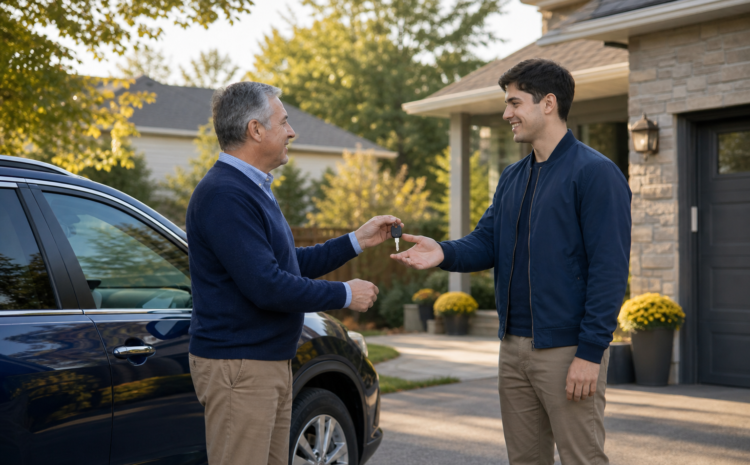
Borrowed Car Insurance: Owner’s Policy or Your Own?
Auto insurance coverage while borrowing a car depends on permission, the vehicle’s policy, how you use it and the terms of your own policy. OPCF 27 may address physical damage to an eligible borrowed or rented vehicle, subject to its wording, limits and exclusions. Related reading: Mortgage life insurance.
Before accepting the keys, confirm permission, carry proof of insurance and ask how the vehicle will be used. The answer changes if you drive it regularly, use it for work, take it outside Ontario or need protection for damage to the vehicle itself.
Before you drive: permission, proof and the vehicle’s use
Do not drive someone else’s car until the owner has given you permission and you know the vehicle is insured for the intended use. If you borrow the vehicle, carry a paper insurance card or an electronic version that has been emailed or transferred to you. Review the Ontario proof-of-insurance requirements before leaving.
Use this decision sequence:
- Do you have clear permission? Ask the owner directly. Permission to borrow the car is different from assuming you are entitled to use it.
- Is the use occasional? A weekend visit or isolated errand differs from using the vehicle several times every week.
- Is the use personal? Driving to appointments or visiting family differs from carrying paying customers, delivering goods or using the car for business.
- What vehicle are you driving? Ask about the vehicle’s policy, restrictions and intended use. Special vehicle types, heavier vehicles and unusual uses require a policy-specific review.
- Do you have your own auto policy? Your policy may offer protection while you drive a vehicle you do not own, but check the wording and endorsements before relying on it.
If the owner has not given permission, do not drive the vehicle. If you expect repeated or extended access, explain that honestly to the owner’s insurer or broker. A driver who regularly uses someone else’s vehicle may need a different arrangement from someone borrowing it once.
For a broader Ontario explanation of non-owned arrangements, see this guide to non-owner car insurance in Ontario. It addresses the longer-term question, while this article focuses on the decision before you borrow a car.
Whose insurance may respond? A practical coverage map
There is no single borrowed-car insurance answer for every driver. The owner’s policy, your own policy, an OPCF endorsement and rental-company protection can each address different parts of the risk.
| Coverage route | What it may address | What you must verify |
|---|---|---|
| Vehicle owner’s auto policy | May be relevant when a permitted driver uses the described vehicle. | Permission, listed drivers, vehicle use, policy conditions, limits and exclusions. |
| Your own auto policy | May provide liability or other protection while you operate a vehicle you do not own. | Whether it applies to this vehicle, use, location and duration, and the applicable policy terms. |
| OPCF 27 | May provide physical damage protection for an eligible rented or borrowed vehicle. | Eligible vehicles, maximum values, duration, use, territory, deductibles and exclusions. |
| Rental-company protection | May provide protection offered with a rental agreement, subject to its terms. | What is included, excluded or duplicated by your existing policy, plus the deductible and damage process. |
| Potential gap | Can arise when permission, policy eligibility, vehicle type, use or territory does not match the coverage. | Who pays for damage, liability, injuries and related expenses if the expected policy does not respond. |
The Ontario Automobile Policy describes coverage when an insured person, or another person possessing a described automobile with the owner’s consent, uses or operates it. The certificate and policy terms determine which coverages apply, so this wording is not a promise of payment for every claim. Read the Ontario Automobile Policy wording for the regulatory framework.
What each policy may address: liability, damage, injuries and belongings
If a borrowed vehicle is damaged while you are driving it, the answer depends on the applicable policy and the physical-damage coverage available. Permission to drive does not automatically determine who pays for repairs.
Third-party liability
Liability coverage deals with claims from other people for injury, death or property damage arising from an insured accident. Ask the owner’s insurer or your own insurer which policy and liability limits apply to the particular vehicle, driver and use. The certificate and policy wording provide the answer for that situation.
Damage to the borrowed vehicle
Damage to the car you borrowed is separate from liability. Collision, comprehensive or an applicable non-owned automobile endorsement may be relevant, but only if the policy covers that vehicle and situation. FSRA describes an optional endorsement that can provide physical damage coverage for vehicles the insured does not own, including rented or borrowed vehicles, subject to its terms. Review optional coverage for rented or borrowed vehicles before relying on it.
Injuries and accident benefits
Accident Benefits are not the same as coverage for vehicle repairs. After an accident, report injuries promptly and ask the insurer which policy and claims process apply.
Deductibles
A deductible can apply to physical damage coverage even when the driver had permission. Ask which policy’s deductible would apply, whether it differs for collision and comprehensive losses, and whether you would be responsible for paying it.
Personal belongings
Items stolen from or damaged inside a borrowed vehicle should be reviewed separately from damage to the vehicle. Ask whether personal belongings are covered under an applicable home, tenant or other property policy, and check its limits and exclusions.
Borrowed car versus rental car: do not treat them as the same
A privately borrowed car and a rental car involve different contracts and different questions. With a friend’s or family member’s vehicle, start with the owner’s policy and permission. With a rental, review your own policy, any applicable OPCF endorsement and the rental agreement’s protection before declining or accepting the rental company’s options.
OPCF 27 can provide physical damage protection for an eligible vehicle that you rent or borrow. It is not a universal substitute for liability coverage, and it does not automatically cover every rental, borrowed vehicle, duration or use.
If you plan to drive outside Ontario, confirm the applicable territory, vehicle, rental period, liability limits and physical-damage terms before driving. The same applies if the vehicle is used for business.
Four situations that change the coverage conversation
1. You borrow a parent’s car for a weekend
For a one-off personal trip with clear permission, begin with the parent’s policy and confirm that the vehicle is insured for the planned use. Carry proof of insurance, ask whether you are permitted to drive and find out what deductible and physical-damage coverage would apply if you caused damage.
2. You use a friend’s car for one week
A week-long loan is not automatically covered or excluded. Ask whether the owner has told the insurer about the arrangement, whether you will be the only driver and whether your own policy protects you while using a non-owned vehicle. Do not assume that a short duration creates a special one-week policy.
3. You drive a relative’s vehicle repeatedly for several weeks
Repeated access can change the underwriting question even if the vehicle remains registered to your relative. Explain how often you drive, where the vehicle is normally kept, who uses it most and whether the arrangement has a fixed end date. The owner’s insurer or your broker can determine whether the driver should be listed or whether another arrangement is appropriate.
4. You rent a car
For a rental, compare your own policy and any OPCF 27 protection with the rental agreement. Check liability, physical damage, loss-of-use charges, deductible, rental duration and territory. Rental-company protection may fill a gap, duplicate existing coverage or impose different terms.
Short-term use, cost and the right next step
You may be able to arrange protection for driving a vehicle you do not own, but you cannot assume a standard policy can simply be purchased for exactly one week. Availability, eligibility, pricing and duration depend on the insurer, driver, vehicle, use and policy form.
The cheapest option is not necessarily the one with the lowest overall risk. Compare liability limits, physical-damage protection, deductibles, exclusions, territory and claims handling. A quote is useful only when its assumptions and coverage are comparable, which is why a structured car insurance quote comparison should review more than the premium.
To save money, avoid duplicate protection, disclose the actual use, ask about eligible discounts and compare policies on equal terms. Do not remove essential coverage simply because the borrowed vehicle will be used briefly.
If a borrowed vehicle is in a collision
After a collision in a borrowed car, protect people first, preserve information and notify the relevant insurer promptly. Do not decide at the roadside which policy must pay or promise that a claim is covered.
- Check for injuries and immediate danger. Move to safety only when it is safe and contact emergency services when needed.
- Keep proof of insurance available. Carry the paper card or electronic version that was provided for the vehicle.
- Exchange information. Record the other driver’s name, contact details, licence information, plate, insurer and policy information where available.
- Document the scene safely. Photograph vehicle positions, damage, road conditions and relevant signs without putting yourself in danger.
- Contact the appropriate authorities or insurer promptly. Follow the instructions provided for reporting and next steps.
- Notify the owner and the applicable insurer or broker promptly. Give a factual account of who was driving, who gave permission, where the vehicle was used and what happened.
- Ask focused coverage questions. Confirm which policy is responding, whether an endorsement applies, what deductible is being considered and what documents are required.
Ontario rules and forms do not automatically apply everywhere
This guide uses Ontario terminology, including the Ontario Automobile Policy and OPCF endorsements. Those forms and regulatory references should not be applied unchanged in another province, the United States or another country.
If you are travelling outside Ontario, ask your insurer how your coverage applies in the destination territory and whether the borrowed or rental vehicle meets the policy definition. Confirm the equivalent rules and endorsements before driving.
Questions to ask before accepting the keys
- Has the owner clearly given me permission to drive?
- Is the vehicle insured for the trip, destination and intended use?
- Am I an occasional driver, or will I have repeated access?
- Will I drive the vehicle for work, deliveries, paid transportation or another business purpose?
- Which policy responds to damage to the borrowed vehicle?
- What deductible and coverage limit would apply?
- Does my policy include an endorsement for an eligible borrowed or rented vehicle?
- Are there restrictions involving the vehicle type, value, weight, location or length of use?
- Who should be called first if there is a collision?
Prepare the driver’s licence details, vehicle information, dates, destination, intended use and current policy documents before requesting a review. Accurate details help the insurer or broker assess the actual situation instead of a simplified version.
Get a policy-specific answer before you drive
Borrowing a car in Ontario can be straightforward when permission, proof of insurance and intended use all line up. If the arrangement is extended, repeated, business-related or involves a rental, review the policies and endorsements before taking responsibility for the vehicle. Chase Insurance Brokers Ltd. can help you review Ontario auto insurance coverage against the vehicle and use you have in mind.