

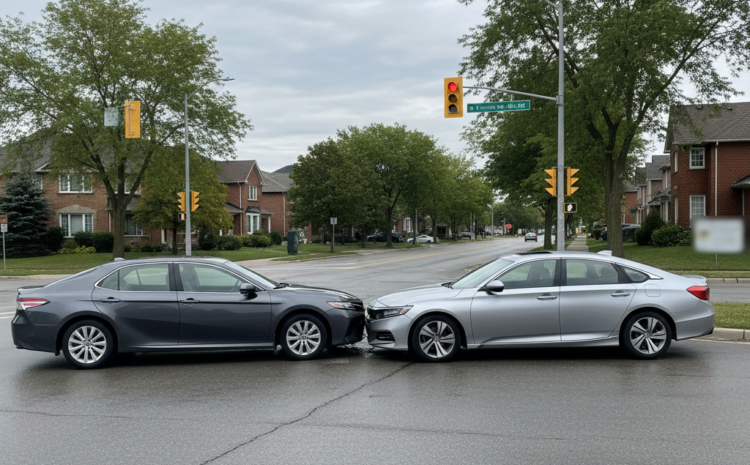
Property Damage Liability Coverage Explained: Ontario Driver Guide
Property damage liability coverage is the part of your auto policy that pays for repairs or replacement of someone else’s property when you’re at fault. In Ontario, it sits inside Third-Party Liability and covers other vehicles, buildings, and public fixtures you damage, plus insurer-provided legal defense—this is property damage liability coverage explained in plain language.
Quick Answer
Property damage liability coverage explained: It pays for other people’s property you damage in a crash you cause. In Ontario, it’s packaged within Third-Party Liability. If you drive near our Whitby office at 400 Dundas St E G-T4A, Chase Insurance Brokers can review limits and options tailored to your routes and drivers.
Summary
Property damage liability covers the cost to repair or replace others’ property after you cause a collision. In Ontario, it’s included in Third-Party Liability with one overall limit that also funds legal defense. Choose limits that reflect multi-vehicle and commercial property risks common across the GTA.
- Core idea: Protects your finances when other people’s property is damaged and you’re legally responsible.
- Ontario format: Single Third-Party Liability (TPL) limit applies to bodily injury and property damage together.
- What’s not covered: Your own car (collision/All Perils handle yours), intentional acts, undisclosed commercial use.
- Why it matters: One event can involve multiple vehicles, storefront glass, and municipal fixtures—costs add up fast.
- Action step: Review limits annually with a licensed broker and consider umbrella liability for added headroom.
Table of Contents
- Property Damage Liability Coverage Explained (Ontario)
- What Is Property Damage Liability?
- Why This Coverage Matters
- How It Works After a Crash
- Limit Types, Umbrellas, and Approaches
- Best Practices for Setting Your Limit
- Tools and Resources
- Case Studies and Examples (Whitby + GTA)
- Pricing Factors (No Dollar Figures)
- FAQ
- Conclusion, Key Takeaways, and Next Steps
Property Damage Liability Coverage Explained (Ontario)
Property damage liability pays for other people’s property you damage when you’re at fault. In Ontario, it’s part of Third-Party Liability and includes legal defense up to your policy limit. It does not pay to fix your own car; that’s handled by collision or All Perils.
- Plain definition: Coverage that responds when you damage property you don’t own and are legally responsible.
- Where it lives: In Ontario auto policies, it sits inside the single Third-Party Liability (TPL) limit.
- What it pays for:
- Repairs/replacement for other vehicles you hit (panels, sensors, cameras, frames).
- Damage to buildings and storefront glass, fences, mailboxes, gates, and retaining walls.
- Municipal fixtures like guardrails, hydrants, utility boxes, and traffic equipment if impacted.
- Insurer-provided legal defense and settlements, up to your selected limit.
- What it doesn’t cover:
- Your vehicle (collision or All Perils covers your car, subject to deductibles).
- Injuries to you or your passengers (Accident Benefits provides medical/income supports).
- Intentional damage or undisclosed commercial/ridesharing use (coverage could be compromised).
- Why it’s packaged: A single TPL limit simplifies claims where both injury and property damage occur in the same event.
Self-contained explainer: In Ontario, property damage liability is not a standalone line-item—it’s one component of the TPL limit that pays for other people’s property plus your legal defense. To protect savings and home equity, most households select higher limits.

What Is Property Damage Liability?
It’s the portion of Third-Party Liability that pays for damage to someone else’s property you cause while driving. It applies to cars, buildings, and public fixtures, and it includes insurer-provided legal defense within your limit.
Coverage scope in everyday terms
- Vehicles: Bumpers, body panels, ADAS sensors, and paintwork on the other driver’s car.
- Structures: Storefront glass, door frames, brickwork, and signage in retail plazas.
- Public fixtures: Guardrails, light standards, hydrants, and traffic control boxes.
- Contents exposures: In limited scenarios, claims may reference contents loss (e.g., a shattered display); the property owner often pursues these.
Here’s the thing—modern vehicles carry more technology per panel than ever. Even a low-speed tap can involve camera/calibration work. That’s why limits matter.
What’s excluded (and what covers you instead)
- Your car’s damage: Handled by collision or All Perils if you carry those options.
- Your injuries: Addressed by Ontario Accident Benefits, separate from liability.
- Intentional acts/fraud: Not covered; policies require honesty and lawful use.
- Undisclosed commercial/rideshare use: Can jeopardize coverage—tell your broker about deliveries or ride-hailing.
Not sure which coverages you carry today? Our overview of auto coverage types explained breaks down collision, comprehensive, Accident Benefits, and more in approachable terms.
The Ontario structure in one minute
- Single limit: One TPL amount funds both bodily injury and property damage together.
- Defense included: Your insurer appoints counsel and manages legal steps up to policy terms.
- Deductible: No deductible applies to payments made to third parties under liability.
- Priority of payment: Ontario’s framework and fault rules guide how insurers sort responsibilities.
For cross-border drivers: Many U.S. states use split limits (per person/per accident/property damage). That’s different from Ontario’s single-limit approach.
Why This Coverage Matters
It shields your finances from repair bills, legal fees, and settlements when you cause property damage. Multi-vehicle collisions, commercial storefronts, and municipal fixtures can quickly exhaust low limits—higher limits help preserve savings and future income.
Financial protection that scales with real-world risk
- Multiple targets, one event: A slip into a plaza can involve another vehicle, a sign, and a glass pane—three claims from one mistake.
- Tech-heavy repairs: Cameras, radar, and calibration drive repair complexity on modern vehicles.
- Business impacts: Commercial property owners may allege downtime or cleanup costs after an impact.
- Municipal billing: Towns invoice for fixtures like hydrants and guardrails when they’re struck.
In our experience advising families across the GTA, limit decisions feel abstract until you picture a chain-reaction fender-bender near a busy driveway. The exposure becomes real fast.
Local context: Whitby and the GTA
- Arterials and driveways: Dundas St E, Taunton Rd, and Brock St mix speeds with frequent turns—prime conditions for low-speed impacts with high-tech cars.
- Winter dynamics: Freeze-thaw patterns create black ice on neighborhood streets, increasing slide-into-object claims.
- Parking structures: Tight ramps and columns lead to scrapes and signage hits—property managers pursue repairs.
We’ve found that households who right-size limits report greater peace of mind—especially those adding teen drivers or lengthening commutes.
Defense matters as much as dollars
- Insurer-provided counsel: Experienced legal teams defend you within policy terms.
- Claim coordination: Your insurer handles appraisals, vendor selection, and negotiations.
- Time saved: A streamlined defense reduces disruption to work and family schedules.
Legal defense is built into the liability promise. It’s not just about paying a bill—it’s about managing the process end to end so you can move forward.
How It Works After a Crash
You report the loss, your insurer confirms responsibility, and it pays for others’ property damage up to your limit. They coordinate estimates, repairs, and settlements, and they provide legal defense if you’re sued. No deductible applies to third-party liability payments.
Immediate steps at the scene
- Check safety first: Move vehicles out of traffic when possible and call emergency services if needed.
- Document the scene: Photos, location, time, weather, and close-ups of damage help later.
- Exchange details: Get names, plate numbers, insurers, and witness contacts.
- Police report: File when required; keep the report number for your broker and insurer.
Keep a simple claims checklist in your glovebox. It speeds up reporting, which helps keep the process clean.
Broker and insurer coordination
- Call your broker: A quick call clarifies whether to report immediately or wait for guidance.
- Fault assessment: Ontario’s rules help insurers assign responsibility—partial fault is possible.
- Settlement process: Your insurer pays the third party or their insurer directly for property damage.
- Defense engagement: If litigation starts, your insurer assigns counsel and manages timelines.
Want a broader prep refresher? See our guide on how to choose auto insurance in Ontario for planning tips beyond liability.
Clean documentation = smoother claims
- Consistent statements: Align your report, photos, and any witness accounts.
- Prompt reporting: Faster notice helps the insurer act before small issues escalate.
- Usage disclosure: Be clear about business or rideshare use—it affects coverage application.
We’ve seen that organized documentation often reduces cycle times and keeps the experience less stressful for everyone involved.
Limit Types, Umbrellas, and Approaches
Ontario uses a single Third-Party Liability limit that funds both injury and property damage claims. Many households select $1M or $2M. Some add a personal umbrella for extra protection above auto and home policies.
| Approach | How It Works | Pros | Considerations |
|---|---|---|---|
| Ontario TPL Single Limit | One limit applies to both injury and property. | Simple; defense included; robust at higher limits. | Low limits can be tapped quickly in multi-party events. |
| U.S. Split Limits (context) | Separate per-person, per-accident, and property limits. | Useful for cross-border education only. | Not how Ontario issues policies; for illustration. |
| Personal Umbrella (optional) | Excess liability above auto/home. | Extra cushion for severe losses and legal defense. | Requires qualifying underlying limits; ask your broker. |
Choosing a practical TPL limit
- Traffic density: Heavier traffic and complex intersections increase multi-vehicle risk.
- Commute pattern: Longer, highway-heavy commutes raise exposure frequency.
- Household drivers: New drivers or occasional borrowers change your risk picture.
- Assets to protect: Home equity, savings, and future income should guide your limit floor.
We often model scenarios with families: a chain-reaction tap, a storefront glass impact, a municipal fixture strike. Seeing limits “fill up” in examples helps right-size decisions.
Where umbrellas fit for Ontario families
- What it is: A separate policy that sits over auto and home for extra liability protection.
- Why consider: It’s designed for the tail-risk events that outstrip underlying limits.
- Eligibility: Requires certain minimum limits on auto/home to qualify.
If you’re a landlord or business owner, umbrella liability can coordinate across personal and commercial exposures—speak with our team about fit.
Small business angle: Commercial vehicles
- Business use disclosure: If you deliver goods or carry tools, commercial auto may be appropriate.
- Signage and trailers: Vehicle wraps and trailers can extend what you might damage.
- Coordination: Align limits with small business insurance in Ontario to avoid gaps.
For many owner-operators, separating personal and commercial auto keeps claims cleaner and reduces disputes about usage.
Best Practices for Setting Your Limit
Pick a limit that matches how and where you drive, who drives, and what you need to protect. Revisit annually, disclose any business/rideshare use, and consider an umbrella if your household’s risk or assets are growing.
Map your driving exposure
- Routes and times: Rush-hour 401 vs. local errands create different risk profiles.
- Seasonal patterns: Winter tires, early sunsets, and lake-effect snow shift risk dramatically.
- Parking environments: Tight garages and street parking boost low-speed impact chances.
Sketch a simple map of your weekly driving. Where are the choke points? Where does visibility drop? Those spots often drive claims.
Audit your household and assets
- Drivers: Teens, new Canadians adjusting to winter, or occasional borrowers.
- Assets: Home equity, savings, and income streams you want insulated from judgments.
- Activities: Towing, trailering, and weekend projects change exposure.
If you rent out property, your risk picture broadens. Our primer on types of insurance in Canada connects personal and landlord considerations.
Set a review cadence
- Annual review: Vehicles, commutes, and drivers change—your limit should keep pace.
- Life events: Moves, promotions, and home purchases may justify another look.
- Claim learnings: Near-miss or minor claim? Use it to refine your plan.
We recommend calendar holds—15 minutes each year—to validate that today’s limit still fits tomorrow’s life.
Tools and Resources
Combine a broker’s guidance with insurer apps and simple checklists. Keep digital pink slips, log photos after an incident, and gather witness and police report details. Clear records help your insurer resolve third-party property claims efficiently.
Broker consults that matter
- 15–30 minutes: Enough time to map routes, drivers, and assets to an appropriate limit.
- Market access: As a brokerage, we compare offers from multiple Canadian insurers.
- Documentation tips: We provide claim checklists and photo guidance to keep facts straight.
Our team fields quick “what-if” scenarios daily—those chats often surface blind spots you can fix in minutes.
Digital tools worth using
- Insurer apps: Proof of insurance, claim intake, and status tracking.
- Phone photos: Wide shots for context; close-ups for detail; plate and VIN when appropriate.
- Shared folder: Keep claim files in one place so everyone in the household can help.
In our experience, families that “standardize” their documentation process see fewer delays and clearer outcomes.
Official orientation
- Ontario resources: Government guidance helps you understand reporting thresholds and road rules.
- Collision reporting centers: Know when and where to file, and what to bring.
- Municipal contacts: For fixture strikes, expect invoices from local authorities.
Bookmark a short list of contacts and keep it in your glovebox with your insurer and broker numbers.
Case Studies and Examples (Whitby + GTA)
From minor bumper taps to storefront glass incidents, real examples show how quickly costs can multiply. Ontario’s single liability limit must stretch across vehicles, buildings, and fixtures—another reason many households select higher limits.
- Rear-end at a light (Dundas St E): You tap a crossover; liability covers their liftgate, sensors, and calibration.
- Parking structure scrape: A column scuffs your bumper and damages signage; property owner seeks repairs.
- Fence and mailbox: A winter skid takes out a panel; neighbor invoices for materials and labor.
- Storefront pane: A low-speed roll breaks glass and door framing; cleanup and repairs follow.
- Hydrant strike: Municipality bills for parts and labor; insurer coordinates payment.
- Chain reaction (401 ramp): Multiple vehicles plus a guardrail add up fast—limits matter.
- Trailer swing: A utility trailer clips commercial signage; mounting hardware replaced.
- Townhome gate arm: HOA pursues a claim; insurer addresses approved charges.
- Construction cones and sign: Displaced safety gear; project invoices for replacements.
- Borrowed car: In Ontario, liability follows the vehicle first; the vehicle owner’s policy responds.
- Boat launch bump: Dock fender damaged; marina submits repair costs to your insurer.
- Delivery disclosure: Undisclosed compensated deliveries can jeopardize coverage—tell your broker.
- Plow windrow skid: Slide into a parked car on Garden St; third-party repairs are covered.
Each example shows how a single mishap can involve several parties. The more parties, the more a low limit gets stretched.
Pricing Factors (No Dollar Figures)
Premiums reflect your selected limit, driving record, vehicle use, territory, and insurer underwriting. Bundling home and auto and keeping a clean record can improve eligibility for preferred options. A broker compares carriers to balance protection and value.
What moves the needle
- Limit selection: Higher limits provide more protection and influence premium.
- Driving profile: Convictions, at-fault claims, and licensing history matter.
- Vehicle use: Commute length, rideshare, deliveries, and annual mileage.
- Where you live/drive: GTA density and traffic patterns shape insurer risk models.
Want to see how bundling plays out? Our team often pairs auto with home or condo policies to streamline renewals and coordination.
Broker advantage: Multiple markets
- Carrier access: Brokerages shop several insurers—one may fit your profile better than another.
- Eligibility wins: Clean documentation and accurate usage unlock better options.
- Fit over flash: We aim for balanced protection, not just the lowest upfront number.
If you’re also a landlord, explore rental property insurance solutions that coordinate with your personal auto plan.
Talk to a Whitby-Based Broker
Want help right-sizing your liability limit? Our team at Chase Insurance Brokers in Whitby reviews your routes, household drivers, and assets to recommend a practical limit—and we quote multiple insurers so you don’t have to.

Local Tips
- Tip 1: On Dundas St E and Brock St S, leave extra room at lights; even small taps can trigger expensive sensor and camera work on modern vehicles.
- Tip 2: Winter in Durham means black ice on side streets—install winter tires early and keep a claims checklist in your glovebox for faster reporting.
- Tip 3: If you added a teen driver or shifted your commute onto the 401, tell your broker—usage changes inform the right liability limit and rating accuracy.
IMPORTANT: These tips support safer driving and smoother claims. For personalized advice, speak with a licensed Ontario broker.
FAQ
Ontario’s property damage liability sits within Third-Party Liability coverage and pays for damage you cause to others’ property. It does not fix your car; collision or All Perils do that. Here are quick answers to common broker questions.
- Is property damage liability required in Ontario?
- Yes. Third-Party Liability, which includes property damage, is mandatory. You must carry at least the provincial minimum, though many drivers select higher limits to protect assets and future income.
- Does my deductible apply to liability payments?
- No. Deductibles typically apply to your own physical damage coverages (e.g., collision). Third-party liability payments to others do not require you to pay a deductible in Ontario.
- What happens if damages exceed my limit?
- Your insurer pays up to your policy limit. If a judgment exceeds it, you could be personally responsible for the remainder. That’s why many households choose higher limits and consider a personal umbrella.
- Will a liability claim affect my premium?
- An at-fault liability claim may impact your rate at renewal, depending on insurer rules and your overall profile. Your broker can explain how different carriers treat prior losses.
- Does liability cover hit-and-run damage to my car?
- No. Liability pays others when you’re at fault. For hit-and-run damage to your vehicle, you’d look to your own collision or to certain protections under Ontario’s Accident Benefits and Direct Compensation rules.
Conclusion, Key Takeaways, and Next Steps
Set a Third-Party Liability limit that matches real exposure. Ontario’s single limit funds both injury and property damage; higher limits plus insurer-provided defense protect savings and peace of mind. A licensed brokerage can compare carriers and tailor recommendations.
Key Takeaways
- Definition: Property damage liability pays for others’ property you damage; it’s inside Ontario’s TPL limit.
- Not for your car: Collision/All Perils handle your vehicle repairs.
- Defense included: Insurer-provided legal defense is part of the liability promise.
- Right-size limits: Consider traffic density, routes, and assets you want to protect.
- Review annually: Update limits when drivers, vehicles, or commutes change.
Action Steps
- Check your current TPL limit on your policy documents.
- List household drivers, routes, and assets to protect.
- Ask about umbrella liability for extra headroom.
- Compare multiple carriers through Chase Insurance Brokers.
Ready for a quick review? Book a 15-minute call with our Whitby team to align your limits with how you actually drive. We’ll compare options across our insurer partners and keep your coverage clear and stress-free.


1 Comment
[…] more on these layers? Our guide to property damage liability coverage explains the liability side in Ontario, and our coverage types explained article shows how they fit […]